 +381 60 639 06 05
 info@monterra.rs
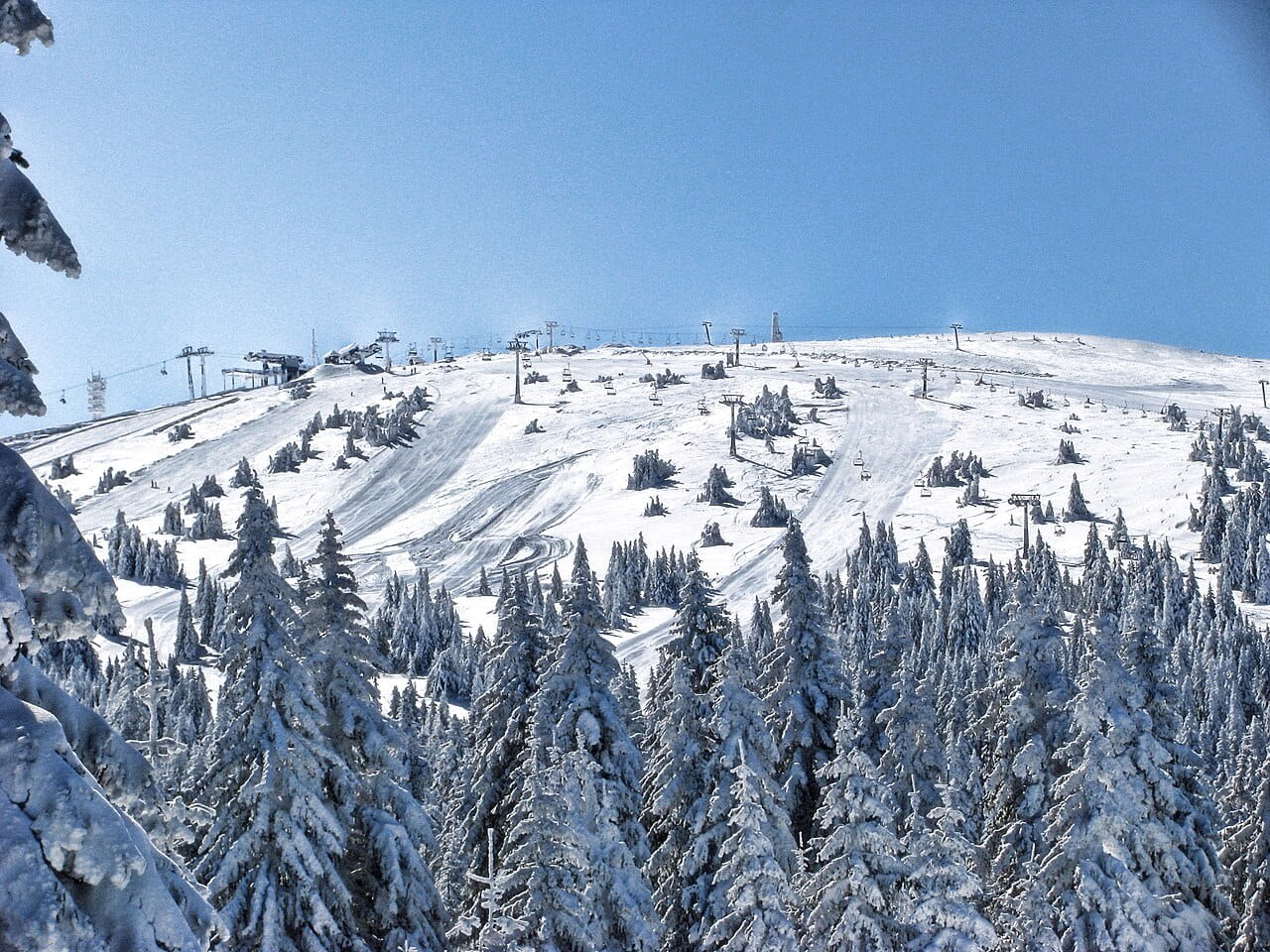
Look at the top of the Kopaonik ski map and you will find the highest point of the whole mountain: Pančićev vrh, 2,017 m above sea level. Many skiers know it as the end of a chairlift. Fewer know that it carries the name of a scientist who spent years walking these slopes with a notebook instead of skis.

Pančićev vrh (2,017 m), the highest point of Kopaonik, in winter. Photo via Wikimedia Commons (CC BY 2.0).
A scientist on the summit
Josif Pančić (1814–1888) was a Serbian botanist, physician and one of the most important naturalists of the nineteenth-century Balkans. He explored Kopaonik repeatedly, collecting and describing plants, and his work shaped how the mountain’s flora is understood even today. He is also remembered for describing the Serbian spruce, a rare tree found only in the Balkans.
2,017 m
the highest point of Kopaonik
1951
year the peak was renamed after him
1,600
plant species in the national park
~200
species found only on Kopaonik
How the peak got its name
The summit wasn’t always named after him. It was renamed Pančić’s Peak on 7 July 1951, on the 100th anniversary of his first expedition to Kopaonik. His remains, and those of his wife, rest in a small mausoleum at the top — a quiet monument above the lifts.
Visiting the summit
The mausoleum of Josif Pančić and his wife stands at the summit, next to the radio tower. Part of the summit area is a military zone, so access can be restricted. Ask locally or check with the park before you plan a visit.
A mountain full of rare plants
His work still matters here. Kopaonik National Park is home to about 1,600 plant species, and roughly 200 of them grow only on Kopaonik, including the Kopaonik houseleek, the Kopaonik violet and a bittercress that bears Pančić’s own name.
From the Digging Mountain to the Sunny Mountain
The name “Kopaonik” itself comes from a medieval trade: in Serbian, kopati means to dig, a reminder of the mines that once worked here. Today the same mountain is known as “the Sunny Mountain”, with more than 200 sunny days a year, and the center of the ski resort is named for Pančić too — Josif Pančić Square, a few steps from our studio.
Next time you take the chairlift, pause at the top. On a clear day you can see ridge after ridge across central Serbia, and you are standing at the place a nineteenth-century botanist spent years studying. Whether you come for the snow or for the summer wildflowers, a longer stay gives you time to see both sides of the mountain.
Facts: Wikipedia, “Pančić’s Peak” and “Kopaonik”, and the Raška tourist guide. Access to the summit area can change; confirm before you go.